


Design of the chicken coop bedroom: Ensuring chickens sleep as soundly as "dead pigs"
- Leo liu
- Apr 24
- 2 min read


Chickens fear two primary threats during sleep: sudden attacks by natural predators and discomfort during rest. To ensure their safety and quality sleep at night, meticulous attention must be paid to the design of chicken coop bedsides.
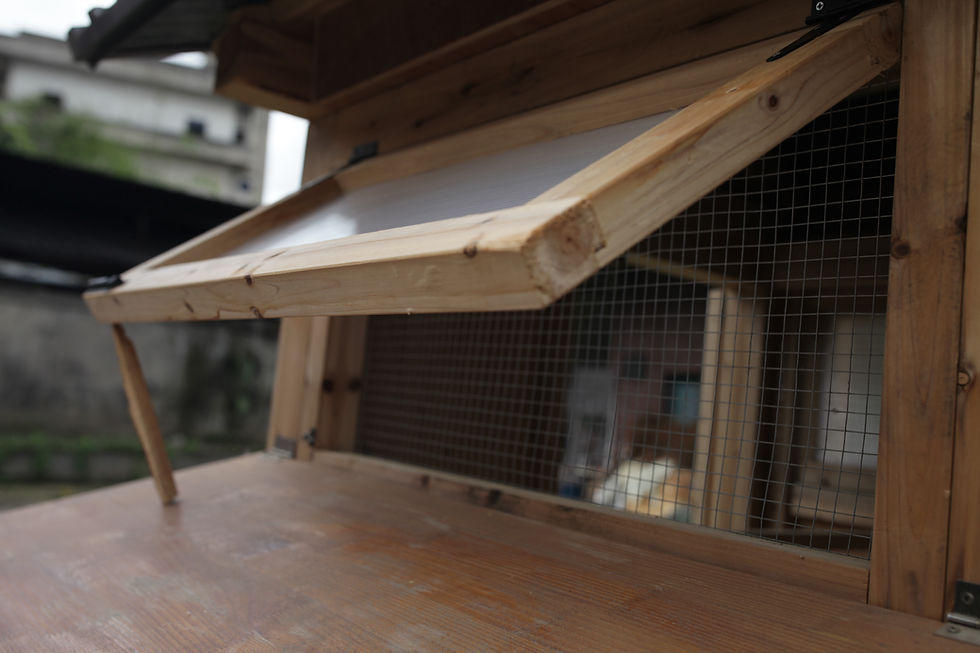
First, protecting against natural predators is like guarding a vault. Chickens are night-blind; in darkness, they are completely helpless. The chicken coop door must be made of solid wood or thick iron plate and equipped with dual locks—some weasels may attempt to break the lock, but their efforts will be in vain. All ventilation openings and windows of the chicken coop must be fitted with iron wire mesh of 1.5 cm mesh size; plastic mesh should be avoided as it tears easily when bitten. Seal any gaps between walls and the floor with cement to prevent rats from entering, thereby eliminating any potential "insiders" for weasels. Remember: Count the chickens before bedtime and lock the door securely.
Second, the perch serves as the chickens' "Mattress." Chickens are naturally inclined to sleep in elevated positions; when provided with a wooden stick, they will eagerly climb onto it. The perches in the coop should ideally be made of natural round logs or bamboo poles, measuring 3–5 cm in diameter, with a smooth, thorn-free surface, and positioned 40–60 cm above the ground. Each chicken should occupy at least 20 cm of perch length; ten chickens require a total length of two meters. The perch height can be designed in a stepped pattern—higher sections are reserved for the lead chickens, while lower sections are for the younger ones, reducing nighttime fighting. Once perched, the chickens can naturally grip the stick firmly with their front claws, ensuring the most stable sleep. Remember: Lay a thick cushioning layer (wood chips or rice husks) beneath the perch; this prevents fractures in case of a fall.
Third, the environment must be dark, dry, and quiet. Chickens require complete darkness in the coop to enter deep sleep. Under no circumstances should lights be left on at night—any light will make them perceive it as daytime, causing them to remain awake. Proper ventilation of the coop is essential, but there should be no direct "steal wind" blowing onto the chickens' backs, as this can lead to colds overnight. The bedding must be dry and firm; it should not absorb moisture when pinched by hand. Wet bedding can cause arthritis in chickens. Remove the feeders and water bowls before bedtime to prevent them from tipping over and wetting the floor during the night.
Here's one final tip: Hang a horizontal bar in the chicken coop, positioned slightly farther from the feeding racks. You'll notice the chickens spontaneously line up, heads facing the same direction, with their necks tucked in and beaks buried in their wings—the very posture that signifies "I'm safe; I'm going to sleep." By the next morning, you'll observe a group of energetic chickens actively laying eggs, their claws noticeably warmer than before.


Comments