


Precautions for Using Solid Wood chicken coop: Although wood is superior, proper maintenance is essential.


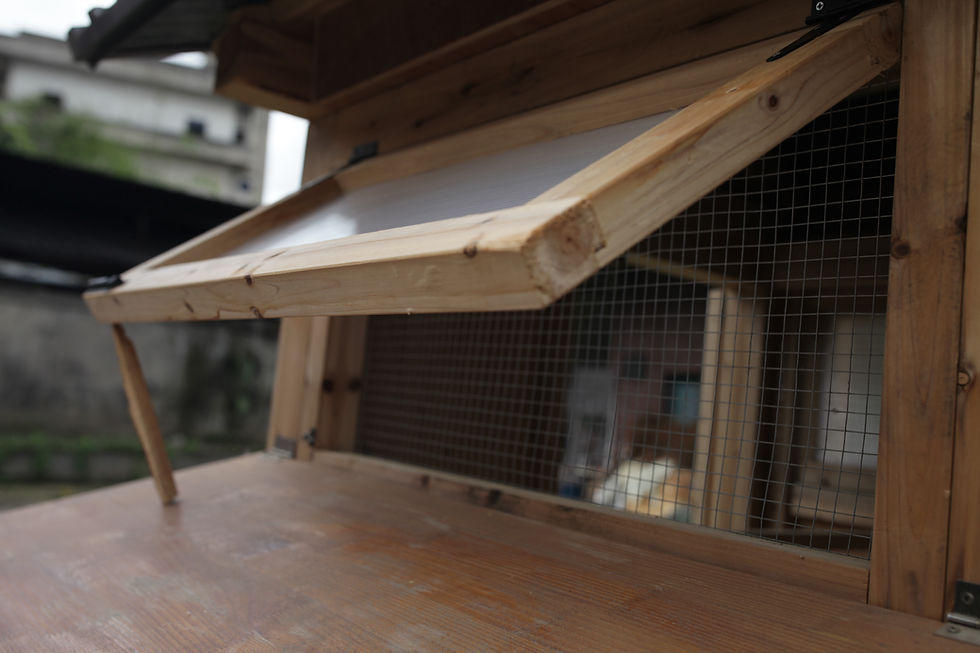
Many poultry farmers who prefer natural environments and aesthetic appeal opt to construct chicken coops from solid wood. Solid wood coops indeed offer several advantages: they are natural, provide excellent thermal insulation—not too hot in summer and not too cold in winter—and have a visually pleasing appearance. However, wood is ultimately an organic material that is exposed outdoors to constant wind and sun exposure, corrosion from chicken manure, and insect damage. Without proper maintenance, the coop may deteriorate severely within two to three years. Below, I will detail several critical considerations for using solid wood chicken coops.
1. Water and moisture resistance is of paramount importance; wood is most vulnerable to prolonged exposure to water—the primary enemy of solid wood. Fluctuations in humidity inside and outside poultry houses cause wood to repeatedly expand and contract, leading to cracking, deformation, and warping. More severely, a persistently damp environment fosters the growth of wood rot fungi, rendering the wood spongy and soft from within—creating pits upon pressure and ultimately rendering it completely incapable of bearing weight.
The approach should be multi-pronged. First, the chicken coop should be located on elevated ground with good drainage; it must never be built in low-lying, waterlogged areas. The foundation should ideally be raised by 10 to 20 centimeters using bricks or cement to prevent the wooden frame from making direct contact with the ground. The supporting wooden frame should be constructed from highly resistant wood, such as treated pine, or alternatively, natural, durable species like fir or teak. At the very least, it should be coated with a thick layer of asphalt or waterproofing material.
Secondly, the roof must be absolutely leak-proof. For solid wood poultry houses, the roof can be constructed using waterproof membranes combined with color-coated steel sheets, or oil felt paired with wooden boards. The critical requirement is that the eaves extend sufficiently long (at least 30 cm) to prevent rainwater from wetting the walls. Regular inspections should be conducted to check for any roof damage, particularly after typhoons or heavy rainfall.
Third, the interior of the chicken coop should be kept well-ventilated and dry. Clean and replace the bedding frequently to prevent the accumulation and fermentation of chicken manure on the wooden floor. The moisture and ammonia in wet manure are more corrosive to wood than rainwater. It is advisable to lay a replaceable plastic mesh or bamboo grate on the wooden floor to allow manure to drain away and prevent direct immersion of the wood in manure.
Finally, on rainy days or after cleaning the chicken coop, promptly open windows and doors for ventilation, and use electric fans to dry damp corners. If water accumulation is present on wooden surfaces, wipe it off with a dry cloth. You may use a hygrometer to monitor the relative humidity inside the coop; if it remains consistently above 80%, the wood becomes hazardous.
II. Anti-corrosion Treatment: It's not as simple as applying just one coat of paint. Solid wood should undergo proper anti-corrosion treatment before use. If you're building a chicken coop yourself, it's best to use treated wood that has undergone CCA (copper-chromium-arsenic) or ACQ (quaternary ammonium copper) pressure treatment. However, these chemical agents are somewhat toxic to chickens; therefore, after treatment, the wood must be air-dried outdoors for two to three months to allow the chemicals to cure and evaporate, followed by a topcoat of eco-friendly wood wax oil or water-based paint. If you're using ordinary solid wood, you must apply at least two coats of outdoor wood wax oil or tung oil to all surfaces—including the hidden back sides, ends, and joints. Tung oil is a traditional and effective treatment that penetrates deep into the wood to provide waterproofing and anti-corrosion protection, and it is virtually harmless to chickens. Before winter each year and after spring begins, reapply the oil coating to your chicken coop, paying special attention to the south and west sides, as these areas are most severely affected by alternating sunlight and rainwater exposure.
Note: Under no circumstances should ordinary indoor wood coatings or polyurethane varnishes be applied to chicken coops. These coatings form a hard but brittle film that cracks under sunlight exposure and are toxic; chickens may ingest wood fragments during pecking. Additionally, preservatives containing highly toxic components such as sodium pentachlorophenol should not be applied, as they can directly kill chickens.
III. Pest and Ant Control: Prevent the Chicken Coop from Becoming a "Termites" Termites, white planthoppers, and longhorn beetle larvae pose serious threats to solid wood structures. These pests infiltrate from concealed locations, eating away at the wood within the coop until it becomes a honeycomb-like structure. The key to prevention lies in eliminating their sources. During construction, avoid piling old wood, wood chips, or tree bark around the coop—this creates a transit hub for termites. Dig a shallow trench around the foundation, sprinkle lime powder or termite control powder (making sure chickens cannot access it), or install termite trap boxes.
If conditions permit, apply a layer of boric acid solution to the wood surface. Boric acid is low in toxicity and relatively safe for chickens, but it effectively kills larvae and inhibits fungal growth. Before each hot season, inspect the corners of the chicken coop, the bases of wooden posts, and floor beams. Use a screwdriver to probe these areas; if the probe easily penetrates and releases powder, it indicates the presence of insects. For minor infestations, inject kerosene or a specialized insecticide into the infested holes using a syringe, then seal the openings with putty. In severe cases, the affected wood must be replaced entirely.
Additionally, chickens themselves feed on small insects, which can mitigate pest infestations to some extent; however, reliance solely on them is not advisable. Maintain cleanliness and weed-free conditions around the chicken coop to reduce habitats for ants and termites.
IV. Structural Stability: Wood ages, and screws may loosen. Although solid wood is sturdy, year-round temperature fluctuations and humidity cycles can cause wood fibers to fatigue, and screws and nails at joints may loosen due to wood expansion and contraction. Every three months, use a wrench and screwdriver to inspect all connections, particularly the load-bearing columns, beams, rooster coop support points, and door frame hinges. Tighten loose screws; if screw holes have worn threads, replace with longer screws or use adhesive for reinforcement.
Pay attention to the nails: If ordinary iron nails are used, they will rust quickly. After rusting, they not only lose their securing capacity but also contaminate the wood. It is preferable to use stainless steel screws or hot-dip galvanized screws. For support rods that are merely placed in the slots, they may fall off over time; therefore, screws should be inserted at both ends for secure locking.
The doors and windows of the chicken coop are the most frequently used areas, where hinges are prone to sagging, causing the doors to rub against the floor or fail to close tightly. In such cases, adjust the hinges or elevate the lower door frame. Additionally, inspect for longitudinal cracks in the wood. Minor cracks may not require intervention; however, cracks wider than two millimeters that extend over a significant length should be filled with wood glue and wood shavings, then secured with clamps for curing, or reinforced with a patchboard.
V. Special Considerations for Cleaning and Disinfection The solid wood surfaces of chicken coops are less smooth than cement or plastic surfaces, containing numerous tiny pores that readily accumulate dirt and grime. When chicken manure seeps into the wood gaps, it not only produces an unpleasant odor but also causes persistent corrosion. Therefore, during cleaning, avoid using high-pressure water guns—water will penetrate the wood interior and take a long time to dry, thereby accelerating decay. The correct procedure is: first remove hardened manure with a shovel; then scrub the surface with a stiff-bristled brush dipped in diluted disinfectant solution; finally wipe away excess liquid with a semi-dry cloth and ventilate the area immediately to allow drying. Minimize prolonged immersion of the wood in liquid.
The selection of disinfectants requires careful consideration. Chlorine-based disinfectants (e.g., 84) exhibit bleaching and corrosive effects on poultry house wood; prolonged use can lead to lignin degradation, resulting in a rough, powdery surface. Iodine-based or hydrogen peroxide formulations are preferable due to their weaker oxidizing properties, minimizing wood damage after thorough rinsing. Quaternary ammonium disinfectants may also be used, but they should not be mixed with soap or anionic surfactants.
Additionally, special attention should be paid if the feeders and waterers in the chicken coop are also made of wood. Wood absorbs moisture, leading to mold growth and bacterial proliferation; constant pecking by chickens can result in ingestion of significant amounts of mold. It is recommended to use stainless steel or plastic feeders and waterers, keeping them separate from the wooden main structure of the coop. The wooden components of the roosting racks and egg production boxes may be retained, but the chicken droppings on their surfaces should be regularly scraped off, and burrs should be periodically ground off with sandpaper to prevent injury to the chickens' footpads.
6. Preventing Chicken Pecking: You might be surprised that chickens, which originally come from a carpenter background, can peck wood. Especially when kept in dense cages, chickens may develop a "pica" due to lack of movement or insufficient minerals, specifically pecking at communal wooden beams, wall corners, or perches. Mild cases leave dense peck marks, while severe cases can create depressions or even holes in the load-bearing beams of the coop. The solution is to ensure the chicken diet contains adequate minerals (particularly salt and sulfur) and crude fiber. Additionally, hanging a few red bricks or an old fishing net in the coop can provide playtime and divert the chickens' attention. Furthermore, apply a thin layer of iron sheet, plastic board, or bamboo strips over surfaces prone to pecking to create a physical barrier. For areas already damaged by pecking, reinforce the corners with galvanized iron sheets.
7. Seasonal Special Maintenance: During the spring plum rain season, inspect the chicken coops roof and drainage ditches in advance and remove leaves to prevent water accumulation. In summer, when temperatures are high and sunlight intense, solid wood is prone to cracking; hang a layer of shade netting on the exterior walls to reduce direct ultraviolet radiation. In autumn, when dry, apply wood varnish or tung oil both inside and outside the coop, paying special attention to ends and joints. In winter, when temperatures are low and wood becomes brittle, avoid vigorous striking when clearing snow to prevent cracking; simultaneously, ensure a balance between ventilation and insulation in the coop to prevent moisture condensation on the wooden boards from remaining unventilated for extended periods.
Finally, here's a piece of advice: a solid wood chicken coop is not a one-time, permanent solution; it requires annual maintenance and monthly inspections, much like caring for a wooden boat. If you enjoy hands-on work and the satisfaction of woodworking, a solid wood coop can bring great fulfillment. However, if you prefer convenience and lack the time for regular upkeep, opt for brick-concrete, color-coated steel, or wood-plastic composite materials—they are far less troublesome. But since you've chosen solid wood, treat it well: apply oil regularly, ensure proper moisture control, protect against insects and ants, and inspect the screws periodically. With proper care, a solid wood coop can last for over a decade—and may even become a cherished heirloom.


Comments